

Choosing the wrong contractor can turn your dream renovation into a nightmare. Here's how to get it right. Every year, thousands of homeowners invest thousands of dollars into home renovations and far too many end up disappointed, over budget, or stuck in legal disputes. According to Ohio Attorney General data, contractor complaints cost homeowners over $1 billion annually nationwide, with poor contractor selection being the primary cause.
The difference between a successful renovation and a disaster often comes down to one critical decision: choosing the right contractor.
Whether you're planning a kitchen remodel in Columbus, finishing your basement in Dublin, or updating your bathroom in Bexley, selecting a qualified, reliable contractor is the most important step you'll take. The right contractor becomes your partner, bringing your vision to life with quality craftsmanship, clear communication, and professional integrity. The wrong contractor brings stress, delays, cost overruns, and subpar work.
With over 15 years of experience serving Central Ohio homeowners, Fresh Home has built a reputation on transparency, quality, and integrity. We believe educated homeowners make the best clients, which is why we're sharing everything you need to know to make an informed contractor selection even if you ultimately choose someone else.
Let's ensure your next renovation is everything you dreamed it would be.
The 10 Essential Questions to Ask
These questions separate professional contractors from amateurs. Ask every candidate these questions before making your decision.
1: How Long Have You Been in Business?
Why It Matters:

Experience and stability are critical indicators of a contractor's reliability. Businesses that have survived 5, 10, or 15+ years have proven they can deliver quality work, manage finances, and maintain customer satisfaction.
What to Look For:
- 3+ years minimum: Established systems and processes
- 10+ years ideal: Extensive experience, proven track record
- 15+ years (like Fresh Home): Deep expertise, strong reputation, financial stability
Follow-Up Questions:
- How many similar projects have you completed? Look for: 20+ projects similar to yours annually
- What percentage of your business is this type of work? Look for: 50%+ specialization in your project type (kitchen, bathroom, basement, etc.)
- Have you worked on homes in my neighborhood? Look for: Local experience, understanding of area homes
🚩Red Flags To Watch For:
- Can't provide a clear answer
- Very new business with no references (less than 1 year)
- Vague about experience level
- No specific examples of similar work
Central Ohio has hundreds of contractors, but many come and go within 5 years. Established contractors like Fresh Home have proven they can weather economic cycles and maintain quality standards.
2: Are You Licensed and Insured in Ohio?
Why It Matters:
This question protects you legally and financially. Licensed contractors have met minimum qualifications. Insured contractors protect you from liability.
What to Look For:
- Current Ohio license number (for applicable trades)
- General liability insurance: $1M minimum coverage
- Workers' compensation insurance: Current certificate
- Willingness to provide certificates: Immediately and without hesitation
How to Verify:
Don't just accept what they tell you:
- Request written proof (certificates of insurance)
- Verify licenses through Ohio OCILB website
- Contact insurance companies directly to confirm coverage
- Check expiration dates (must cover entire project timeline)
🚩Red Flags To Watch For:
- Hesitation or excuses about providing documentation
- Expired coverage
- No insurance ("I'm very careful" is not insurance)
- Can't provide license number
- Offers discount for paying cash "off the books"
Fresh Home Credentials:
- All credentials available immediately
- Happy to provide documentation
- Transparency is our policy
- Full Workers' Compensation coverage for all crew members
- A+ BBB Rating
- 3+ years serving Central Ohio
3: Can You Provide References from Recent Projects?
Why It Matters:
Real-world track record beats marketing promises every time. References give you insight into what working with this contractor is actually like.
What to Look For:
- At least 3-5 references (preferably more)
- Recent projects (within the last year)
- Similar scope to your project
- Local Columbus area references you can verify
- Mix of project types and sizes
Questions to Ask References:
When you call references, ask detailed questions:
- Did they stay on budget? How did they handle unexpected costs?
- Did they meet timeline commitments? What caused any delays?
- How did they handle problems? Were issues resolved fairly?
- Would you hire them again? (Most important question!)
- How was their communication? Responsive? Clear?
- Quality of finished work? Are you still happy with it?
- Cleanliness and professionalism? Did they respect your home?
- Any surprises or issues? What would you want future clients to know?
🚩Red Flags To Watch For:
- No references available
- Only old references (2+ years ago)
- Reluctant to provide references
- All references are friends or family
- Can't provide references for similar project type
- References only in writing (not willing to let you call)
Bonus Points:
- Offers to let you visit completed projects
- Has references in your neighborhood
- References enthusiastically recommend them
- Online reviews (Google, BBB) match reference feedback
4: Will You Provide a Detailed Written Estimate?
Why It Matters:
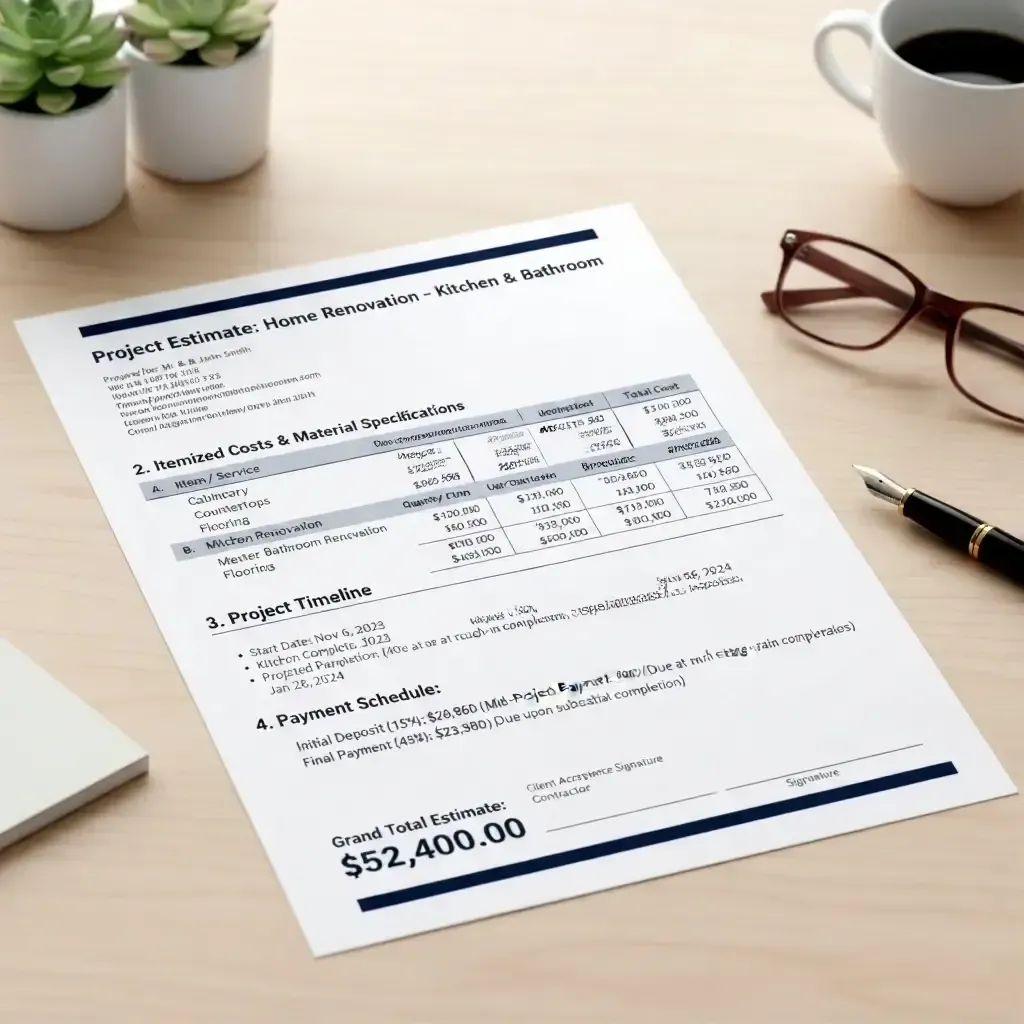
A detailed estimate prevents misunderstandings, scope creep, and billing disputes. It's your roadmap for the entire project.
What Should Be Included:
A professional estimate should contain:
- Itemized Costs:
- Materials listed separately (brands, models, colors)
- Labor costs broken down by phase
- Permit fees
- Disposal/dumpster costs
- Each line item priced individually
- Specific Materials:
- Brand names and model numbers
- Color selections
- Quantity calculations
- Grade or quality specifications
- Project Timeline:
- Start date
- Completion date
- Milestones for each phase
- Lead times for materials
- Payment Schedule:
- Deposit amount (typically 10-30%)
- Progress payments tied to milestones
- Final payment (10-20% held until completion)
- Acceptable payment methods
- Warranty Information:
- Craftsmanship warranty terms
- Material manufacturer warranties
- Duration of coverage
- What's covered and excluded
- Exclusions Clearly Stated:
- What's NOT included
- Homeowner responsibilities
- Additional costs if needed
Warning Signs:
- Vague estimate with lump sum pricing
- Verbal-only quotes (nothing in writing)
- Refuses to itemize costs
- "Ballpark estimate" without detail
- Lowball bid (30%+ below competitors)
- Won't commit to timeline in writing
5: What's Your Payment Schedule?
Why It Matters:

Payment structure protects both parties but should never put you at risk. Proper payment schedules tie money to work completion.
Standard Payment Structure:
A fair payment schedule typically follows this pattern:
Deposit: 10-30% to start
- Covers materials ordering
- Shows commitment from both parties
- Should never exceed 30%
- Paid upon contract signing
Progress Payments: 25-30% at milestones
- After demolition complete
- After rough plumbing/electrical
- After drywall and painting
- After cabinet installation
- Based on work completed, not calendar dates
Final Payment: 10-20% upon completion
- Walkthrough completed
- Punch list items finished
- Final inspection passed
- You're completely satisfied
Example Payment Schedule for $50,000 Kitchen:
- Deposit: $10,000 (20%) - Upon signing
- Payment 2: $12,500 (25%) - Demolition and rough-in complete
- Payment 3: $12,500 (25%) - Cabinets and countertops installed
- Payment 4: $10,000 (20%) - Appliances, backsplash, lighting complete
- Final: $5,000 (10%) - Walkthrough, punch list, satisfaction
🚩Red Flags To Watch For:
- Full payment upfront (major warning!)
- Large upfront deposit (more than 30%)
- Cash-only payments (no paper trail)
- No payment schedule (pay as we go)
- Large payments before work complete
- No receipt or invoice provided
- Payment to personal accounts (should be business account)
- Discount for paying "under the table"
Protection Tips:
- Never pay in full upfront
- Never pay for work not yet completed
- Always get receipts
- Pay by check or credit card (paper trail)
- Withhold 10-20% until completely satisfied
What's Fair:
Contractors need money for materials and to pay crews. A reasonable deposit (10-30%) is normal and fair. Progress payments aligned with completed work protect both parties.
6: Who Will Be My Main Point of Contact?
Why It Matters:
Communication makes or breaks renovation projects. You need to know who you'll talk to when questions arise and they will arise.
What to Look For:
- Dedicated project manager assigned to your project
- Owner involvement (for smaller companies)
- Clear communication channels (phone, email, text)
- Response time expectations (same day? 24 hours?)
- On-site supervision (who's managing daily work?)
Follow-Up Questions:
- Will you (the person I'm talking to) be my contact?
- Who supervises the work on-site daily?
- How do I reach you if there's an emergency?
- What's your typical response time to calls/emails?
- Will I get updates without having to ask?
- Can I text you with questions?
Communication Red Flags To Watch For:
- No clear answer about point of contact
- "Just call the office" (no dedicated person)
- "I'm very busy" (unable to communicate regularly)
- Changes contact person mid-project
- Difficult to reach
- Doesn't return calls/emails
Fresh Home Approach:
Every client gets:
- Dedicated project manager assigned from day one
- Direct phone number and email
- Daily or scheduled check-ins
- Proactive communication about progress
- Same-day response to questions
- Owner availability for concerns
Communication Best Practices:
Good contractors:
- Return calls within 24 hours
- Provide regular updates
- Notify you before arriving
- Discuss issues as they arise
- Document decisions in writing
- Keep you informed throughout
7: Do You Handle Permits and Inspections?
Why It Matters:
Proper permitting ensures code compliance, protects your investment, and prevents problems when you sell your home. Professional contractors handle all permitting.
What to Expect:
Professional contractors should:
- Pull all required permits in their name
- Know which permits are needed for your project
- Schedule required inspections
- Coordinate with Columbus building inspectors
- Provide all permit documentation to you
- Include permit costs in estimate
Columbus Permit Specifics:
Typical Columbus Kitchen Remodel Requires:
- Building permit: $150-$500
- Electrical permit: $100-$300
- Plumbing permit: $100-$300
Processing Time: 2-3 weeks for approval
Required Inspections:
- Rough plumbing (before closing walls)
- Rough electrical (before closing walls)
- Final inspection (project completion)
Why Permits Matter:
- Code Compliance: Ensures work meets safety standards
- Insurance Protection: Insurance may deny claims for unpermitted work
- Resale Value: Buyers' inspectors find unpermitted work
- Legal Protection: You're liable for unpermitted work
- Quality Assurance: Inspector verification of proper installation
🚩Red Flags To Watch For:
- "Permits aren't necessary" (they almost always are)
- Encourages skipping permits (to save money)
- Asks you to pull permits (contractor should handle)
- Vague about permit costs
- No experience with Columbus building department
Columbus Building Department:
- Located at 757 Carolyn Avenue, Columbus, OH 43224
- Phone: (614) 645-8522
- Permits can be verified online
- Inspections must be scheduled in advance
Warning: If a contractor suggests skipping permits to save money, that's a major red flag. Unpermitted work discovered during a home sale can derail closing and cost you thousands to correct or legalize.
8: What Warranties Do You Offer?
Why It Matters:

Warranties protect your investment and demonstrate the contractor's confidence in their work. Quality contractors stand behind their craftsmanship.
Types of Warranties:
1. Craftsmanship Warranty (1-2 years minimum)
- Covers contractor's workmanship
- Installation quality
- Proper construction techniques
- Structural soundness
- Should be in writing
2. Material Warranties (Manufacturer)
- Cabinets: 5-15 years typical
- Countertops: 10-25 years
- Appliances: 1-5 years
- Flooring: 10-50 years depending on material
- Manufacturer responsibility, not contractor
3. Structural Warranties (If Applicable)
- Foundation work
- Framing and load-bearing elements
- Roof systems
- May be separate from standard warranty
What Should Be in Writing:
Your warranty should clearly state:
- Coverage duration (1 year? 2 years? lifetime?)
- What's included (specific systems and components)
- What's excluded (normal wear, homeowner damage)
- How to make claims (contact information, process)
- Response timeframe (how quickly they'll address issues)
- Transferability (does it transfer to new owner if you sell?)
Fresh Home Warranty:
- 2-year craftsmanship warranty on all work
- Covers all labor and installation
- Prompt response to any issues
- In writing with every contract
- Local company we'll be here when you need us
🚩Red Flags To Watch For:
- No written warranty
- Verbal warranty only
- Extremely short warranty (30-90 days)
- Vague warranty terms
- "Everything's guaranteed forever" (unrealistic)
- No process for making claims
Questions to Ask:
- What exactly is covered under warranty?
- How long is the warranty period?
- Is it in writing?
- What's not covered?
- How do I make a warranty claim?
- Have you ever had warranty claims? How were they handled?
9: How Do You Handle Change Orders?
Why It Matters:
Changes during construction are common—sometimes necessary, sometimes desired. Understanding the change order process prevents disputes and surprise costs.
What to Look For:
A clear change order process includes:
1. Written Documentation
- All changes must be in writing
- Verbal agreements don't count
- Change order form signed by both parties
2. Pricing Methodology
- How are changes priced?
- Labor rates for additional work
- Material markup percentages
- Fair and transparent pricing
3. Timeline Impact
- How does change affect completion date?
- Documented in change order
- Realistic adjustment to schedule
4. Approval Required
- Nothing proceeds without your approval
- You sign off before work begins
- Clear cost impact stated upfront
Change Order Example:
Original: White subway tile backsplash - $800 Change: Upgrade to marble herringbone pattern New Cost: $1,850 Difference: +$1,050 Timeline Impact: +2 days Homeowner Signature: ____________
Common Change Situations:
Unexpected Issues Found:
- Rotten subfloor discovered during demolition
- Outdated wiring behind walls
- Plumbing not up to code
- Structural problems Contractor should: Document, explain options, provide pricing, get approval
Homeowner-Requested Changes:
- "While we're at it" syndrome
- Upgrade materials mid-project
- Add features not in original scope
- Expand project scope Contractor should: Provide pricing, timeline impact, formal change order
Questions to Clarify:
- How are change orders priced?
- What's the approval process?
- How quickly do you need my decision?
- How do changes affect the timeline?
- Is there a time limit for making changes?
- What if we disagree on change order cost?
🚩Red Flags To Watch For:
- No formal change order process
- Verbal change agreements
- Pressure to approve changes immediately
- Vague pricing for changes
- Won't document timeline impacts
- Charges significantly more for changes
Protection Tips:
- Never approve verbal changes
- Always get written pricing first
- Understand timeline impact before approving
- Don't feel pressured to decide immediately
- Keep all change orders in project file
10: What Happens If Issues Arise?
Why It Matters:
Problems happen on virtually every project. What matters is how the contractor handles them. This question reveals problem-solving approach and professionalism.
Topics to Discuss:
1. Dispute Resolution Process
- How are disagreements handled?
- Is there a mediation process?
- What if we can't agree?
- Legal recourse if needed
2. How They Handle Mistakes
- Everyone makes mistakes—what matters is correction
- Do they take responsibility?
- How quickly are issues corrected?
- At whose expense?
3. Delays and Weather Impacts
- How are weather delays communicated?
- Material delivery delays?
- Subcontractor scheduling issues?
- Timeline adjustments?
4. Damage to Property
- Accidental damage protocols
- Insurance claim process
- Repair responsibility
- Documentation procedures
5. Communication During Problems
- How quickly are you notified?
- Who communicates issues?
- Solutions presented?
- Decision-making process?
What Good Contractors Say:
"We communicate issues immediately and present solutions. Most problems have multiple solutions at different price points. We explain options and let you decide. Our goal is to solve problems, not hide them."
🚩Red Flags To Watch For:
- "We never have problems" (unrealistic)
- Defensive about the question
- No clear problem-solving process
- Blames homeowners or subcontractors
- Vague about responsibility
- No insurance for damage
Fresh Home Approach:
We believe in radical transparency:
- Issues communicated immediately
- Multiple solution options presented
- Clear cost and timeline impacts explained
- Problems solved collaboratively
- Our mistake = our expense
- 15 years of proven problem-solving in Columbus
Questions to Ask:
- Can you give an example of a problem you encountered and how you resolved it?
- What's your policy if your crew damages something?
- How do you handle timeline delays?
- What if I'm not satisfied with the work?
- Is there a formal complaint process?
Schedule Your Free Consultation with a Licensed Professional →
Choosing the right contractor is the single most important decision in your renovation journey. Take the time to research thoroughly, ask the right questions, and verify credentials. The difference between a successful renovation and a disaster often comes down to contractor selection. Don't rush this decision. Don't choose based solely on price. Don't skip reference checks or license verification.
Invest the time upfront to choose the right contractor, and you'll enjoy the process and love the results for years to come.
Ready to Work with a Contractor You Can Trust?
Fresh Home brings integrity, experience, and quality craftsmanship to every Central Ohio renovation project. Our commitment to transparency, communication, and customer satisfaction has earned us an A+ BBB rating and hundreds of five-star reviews from homeowners throughout Columbus and surrounding areas.
What Makes Fresh Home Different:
✅ Fully Registered & Insured
✅ Employee Crews – Not subcontractors, better quality control
✅ 2-Year Craftsmanship Warranty – We stand behind our work
✅ Transparent Pricing – Detailed, itemized estimates with no hidden costs
✅A+ BBB Rating – Consistently high customer satisfaction
✅Dedicated Project Manager – One point of contact throughout
✅We Handle All Permits – Complete project management
✅Clean, Respectful Service – Your home is our job site